
01 / 10
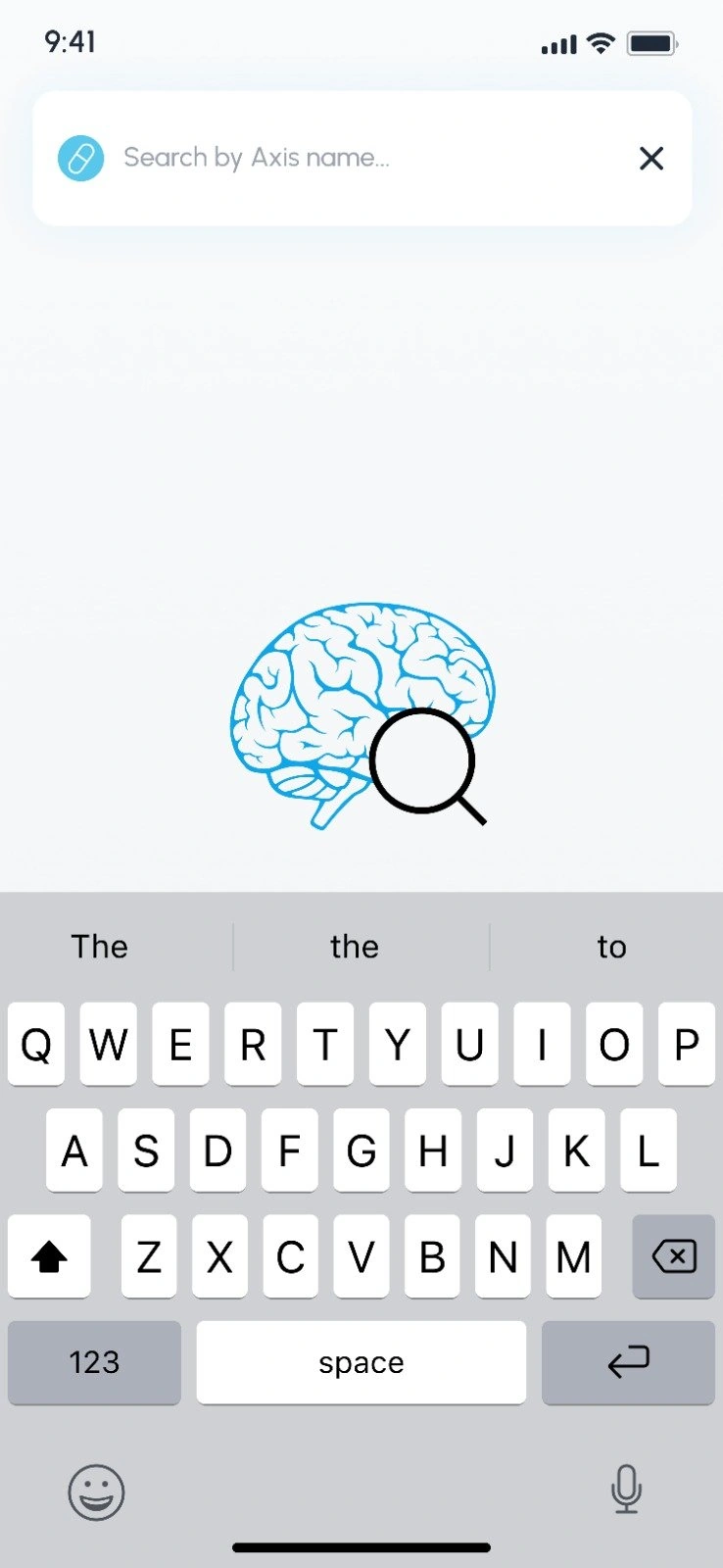
Fast medication search
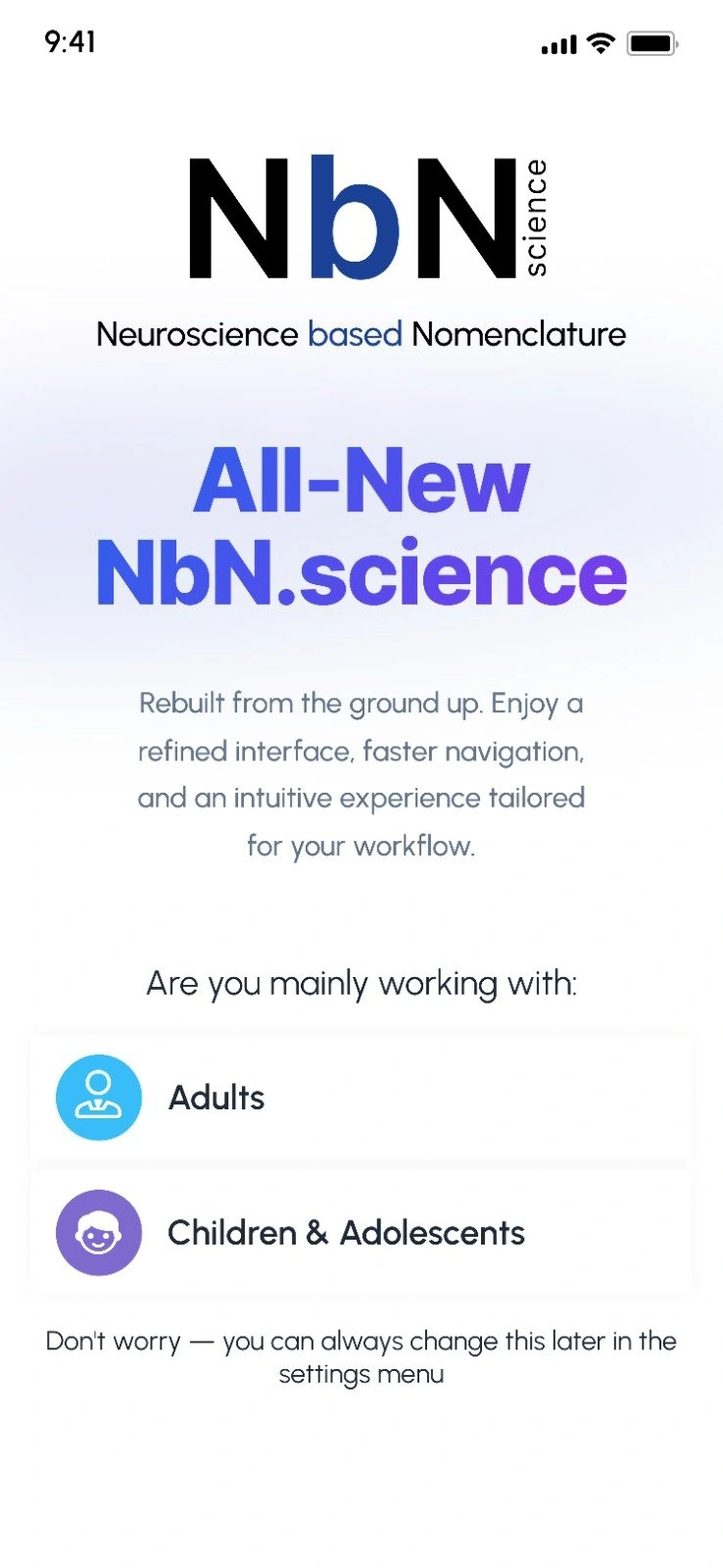
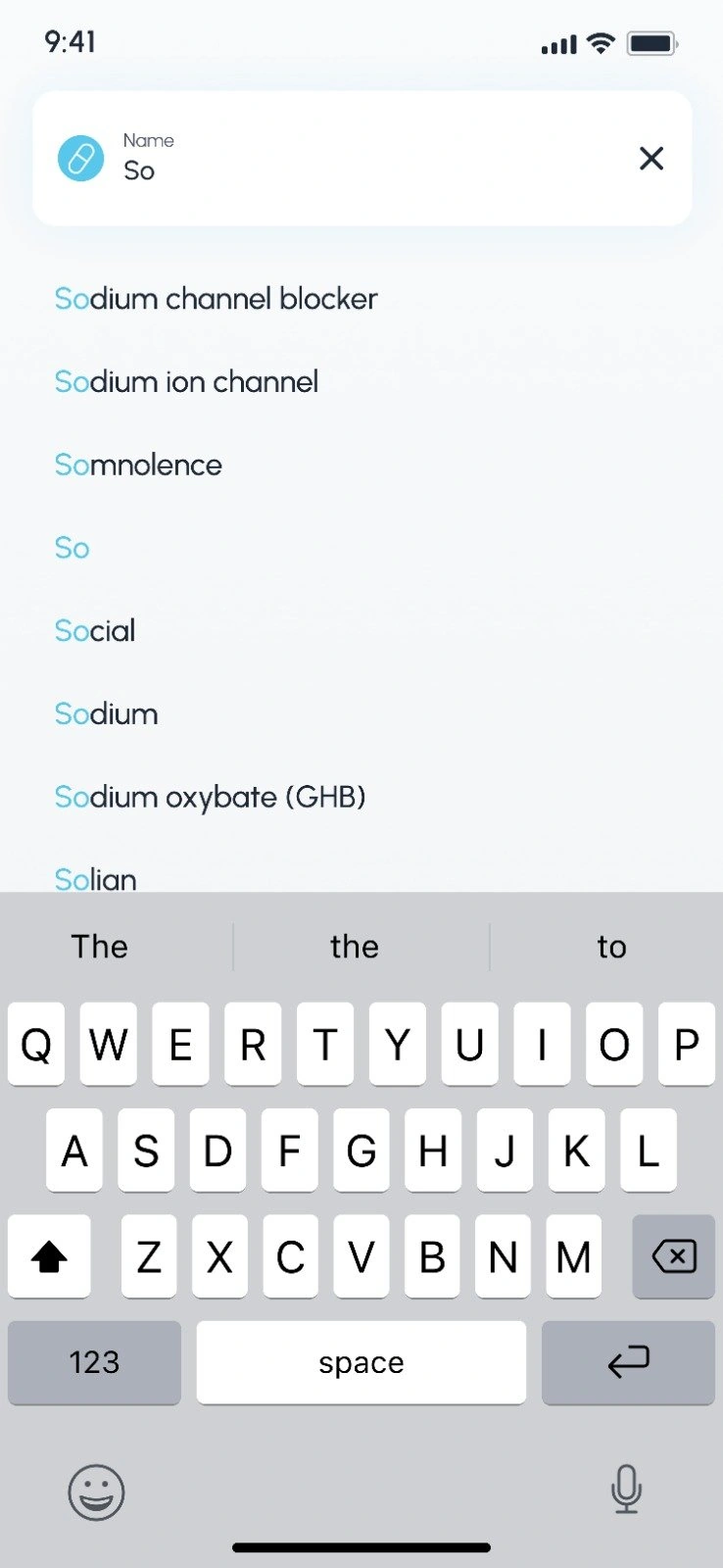
Find a compound in seconds by generic or brand name, or search by disorder and symptom to work backwards from the clinical picture.
Explore psychotropic medications through pharmacology, mode of action, clinical evidence, practical guidance, and contemporary neuroscience — all in one intuitive mobile experience.
Available on Android and iOS
Free of charge · No account required
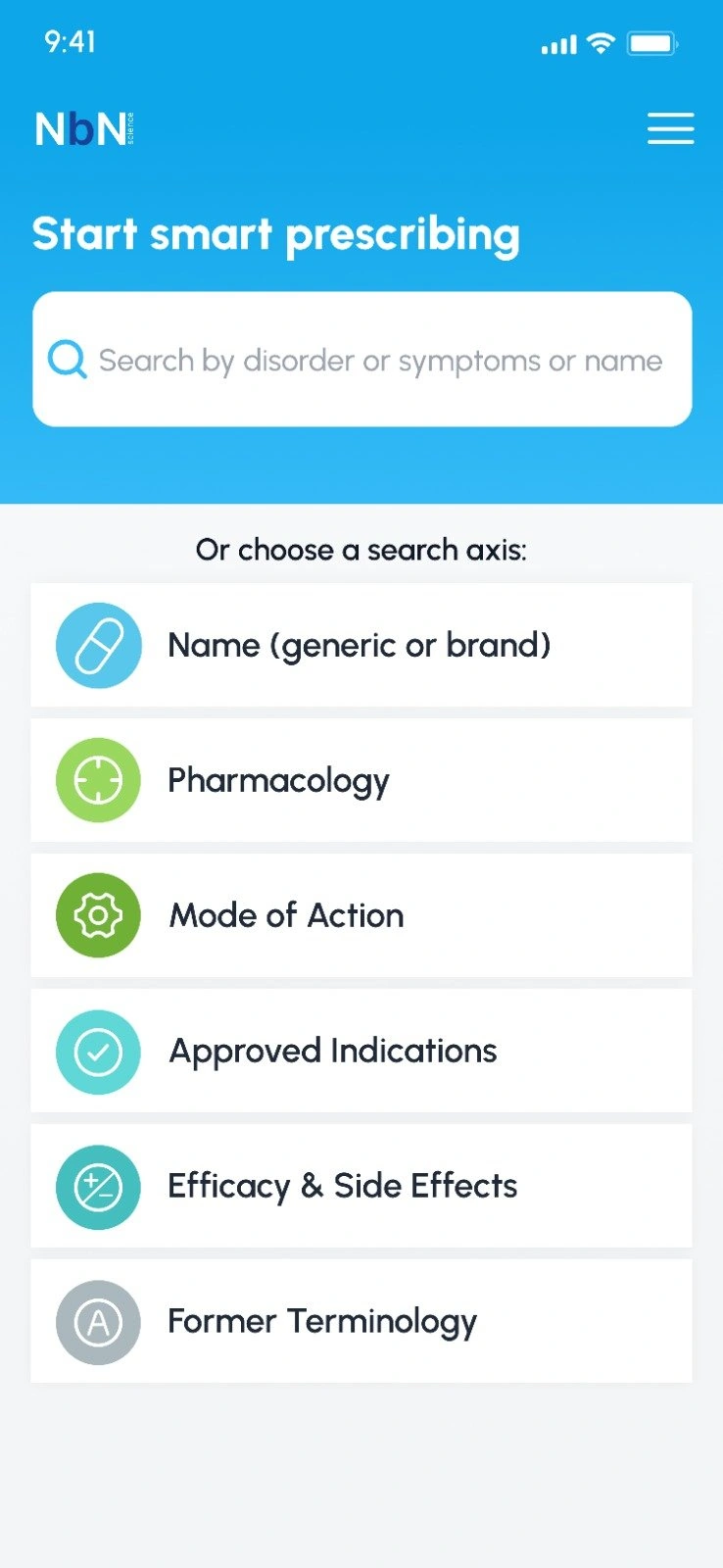
A second edition now covering 130 compounds, in use across clinical practice, research and teaching.
Downloads: 100K+
DownloadsGoogle Play, cumulative installsGoogle Play rating: 4.6
Google Play ratingAverage rating on the Play listingMedications included: 130
Medications includedSecond edition, 22 compounds addedScientific organisations: 5
Scientific organisationsECNP, ACNP, AsCNP, CINP and IUPHARPsychotropic medications are frequently prescribed across clinical conditions far removed from the category they were originally named for. An “antidepressant” is prescribed for anxiety; an “antipsychotic” is prescribed for depression without psychosis.
NbN replaces those historic descriptors with contemporary knowledge about pharmacology and mechanisms of action — so the name of a medicine describes what it does rather than the population it was first studied in.
Traditional terminology
One label, applied across unrelated clinical situations.
A category built for a different era of psychiatry. It tells you what a drug was once thought to treat — not what it does.
The NbN approach
One compound, described across five dimensions.
Every compound in the app is described along the same five dimensions, so two medicines can be compared on mechanism rather than on marketing.
See the five dimensionsEverything in the app is organised around how a prescribing decision is actually made — moving from a name to a mechanism to the evidence behind it.
01 / 10
Find a compound in seconds by generic or brand name, or search by disorder and symptom to work backwards from the clinical picture.
02 / 10
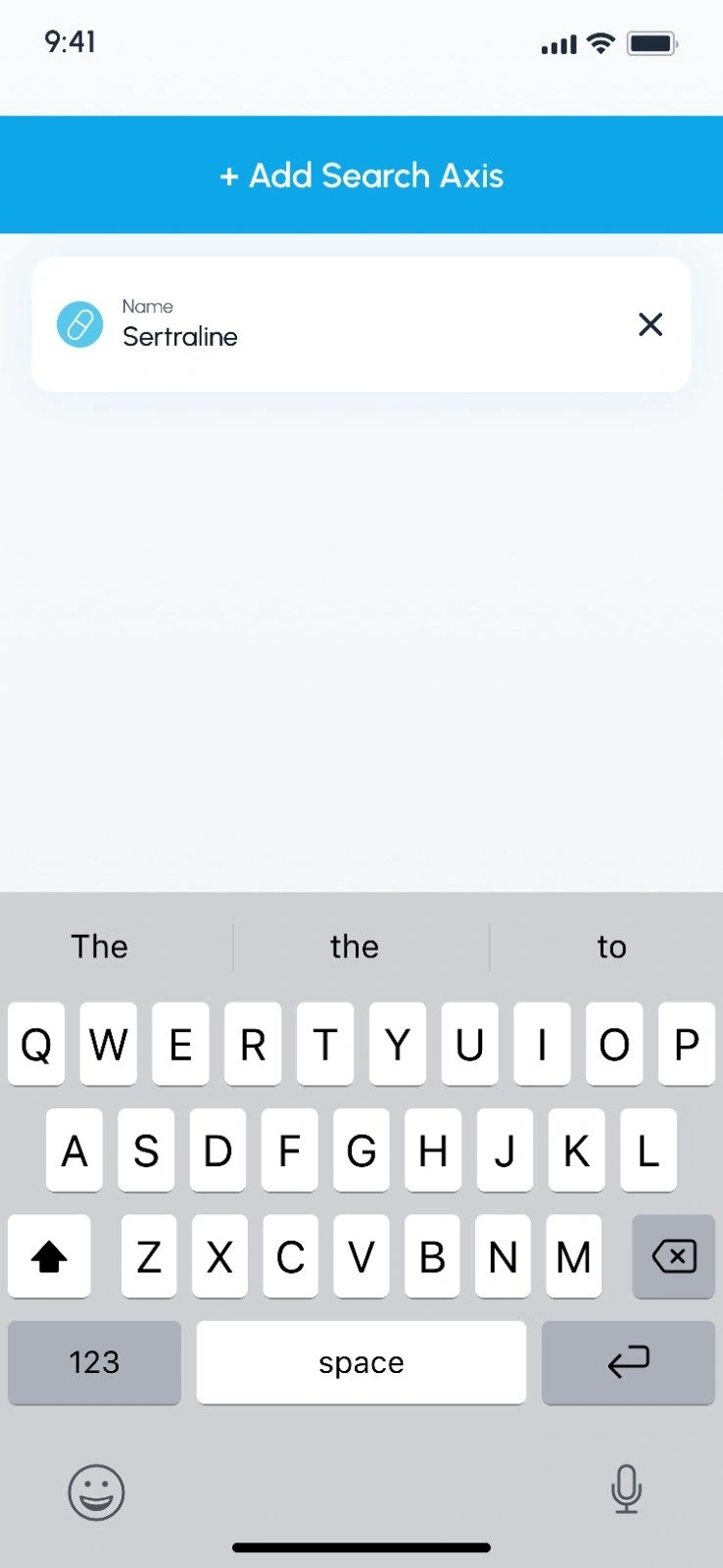
Stack filters across axes — a name, a pharmacology class, a mode of action — and narrow a long candidate list down to the compound you had in mind.
03 / 10
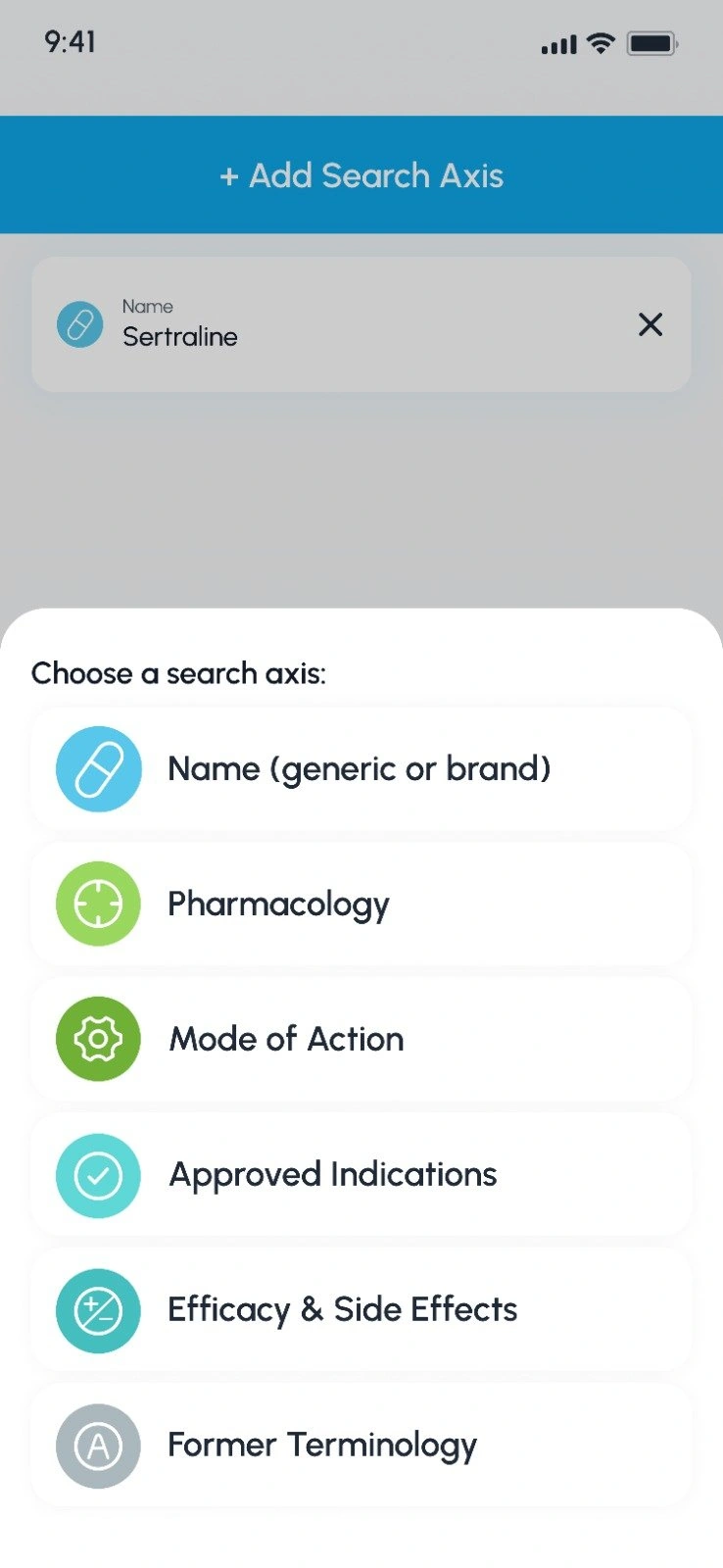
The primary dimension of the nomenclature: the neurotransmitter, molecule or system being modified, and the mechanism by which it is modified.
04 / 10
Regulatory indications drawn from the major authorities, kept visibly distinct from broader evidence of efficacy.
05 / 10
Where the clinical evidence is strong, and which adverse effects are prevalent or clinically serious enough to plan around.
06 / 10
Distilled guidance from the taskforce: the considerations that shape a prescribing decision but rarely reach a label.
07 / 10
The biology behind the compound, split into preclinical and clinical sections with the emphasis on human data.
08 / 10
Jump straight from a compound to the relevant IUPHAR pharmacology record for deeper receptor and target detail.
09 / 10
Built for international practice, with an interface and content model designed to travel across languages and clinical settings.
10 / 10
One compound, five dimensions, arranged so that a familiar drug can be reconsidered in a single pass.
Swipe to explore all 10 capabilities
Pharmacology and mode of action carry the nomenclature. Four additional dimensions supply the clinical and biological context around it.
The organising dimension of the nomenclature: the neurotransmitter, molecule or system being modified, and the mechanism by which the modification occurs.
Use the arrow keys to move between dimensions.
10
Pharmacology classes
The primary organising dimension
9
Modes of action
Mechanistic groupings beneath pharmacology
130
Compounds
Every medication with CNS indications
42
Approved indications
Drawn from the major regulatory bodies
NbN is not a simplified reference. It is a stricter one: every compound described by what it does, in language that holds up across specialities, settings and languages.
The wording throughout the app is deliberately precise. Nothing is framed as a guaranteed outcome, and nothing is presented as a substitute for clinical judgement.
A pharmacological rationale for the next step in treatment, with approved indications, efficacy and practical notes in one place rather than scattered across references.
A consistent vocabulary for describing compounds by target and mechanism, with clinical and preclinical neurobiology kept visibly distinct.
A teaching structure that presents the neuroscience fabric of psychotropics, and a way to explain why a historic category label can mislead.
An entry point that organises learning around pharmacology and mechanism from the start, rather than asking you to unlearn disease-based shorthand later.
Clearer terminology for conversations about medication — a separate adaptation of the nomenclature is written specifically for patients and families.
The Neuroscience-based Nomenclature is a joint initiative of five major neuropsychopharmacology organisations, assembled by a taskforce with a single mission: to embed contemporary neuroscience in the way psychotropic medications are named.
The taskforce includes representatives from each organisation, and the resulting nomenclature is recognised by international colleges and leading journals in the field.
 ECNPEuropean College of NeuropsychopharmacologyLead(opens in a new tab)
 ACNPAmerican College of Neuropsychopharmacology(opens in a new tab)
 AsCNPAsian College of Neuropsychopharmacology(opens in a new tab)
 CINPInternational College of Neuropsychopharmacology(opens in a new tab)
 IUPHARInternational Union of Basic and Clinical Pharmacology(opens in a new tab)
Organisation marks are the property of their respective owners and are shown for identification only.
Download
The full nomenclature, rebuilt as a mobile experience for the moments when a decision is actually being made. Free of charge, with no account required.
Available on Android and iOS
Scan to install on Android
The code opens the official NbN listing on Google Play. On iPhone and iPad, use the App Store button above.
Short, factual answers about the nomenclature and the app. For anything clinical, the initiative's own guidance remains the reference.
Still unsure about something? Contact the team or read the full guidance on the official site.
Neuroscience-based Nomenclature (NbN) is an international initiative that describes psychotropic medications by their pharmacology and mode of action rather than by historic disease-based categories. It was created to bring the language of psychopharmacology back in line with contemporary neuroscience, and it is developed and maintained by a taskforce drawn from five scientific organisations.
The app is built for anyone who needs to reason carefully about psychotropic medications: prescribing clinicians, researchers, educators and students, and the patients and families who want clearer terminology. A separate adaptation of the nomenclature exists for child and adolescent practice, and another is written for patients and families.
Every compound is presented across five dimensions: pharmacology and mode of action, approved indications, efficacy and side effects, a practical note, and neurobiology. The neurobiology dimension is divided into preclinical and clinical sections, and the pharmacology dimension links out to the relevant IUPHAR record for deeper target detail.
Yes. The app is free and available on both Google Play and the App Store. The nomenclature itself is also published on the initiative's website.
No. NbN is an educational and scientific resource. It is not a substitute for independent clinical judgment, diagnosis, or individualised medical advice, and it should not be used as the sole basis for a prescribing decision.
The nomenclature is a living document rather than a fixed standard. Applications are refreshed twice a year, in May and September, to reflect new reports and findings, and the app includes a feedback feature so that clinicians can submit observations and corrections for the taskforce to consider in later editions.